A water mark on the wall can look like a paint problem, but it is usually a clue. The important work is figuring out whether the wall is still getting wet, where that moisture is coming from, and whether the material behind the finish is still sound. A calm, early response can keep a small leak from becoming a larger drywall, trim, flooring, or mold problem.
Start by looking for changes in the wall
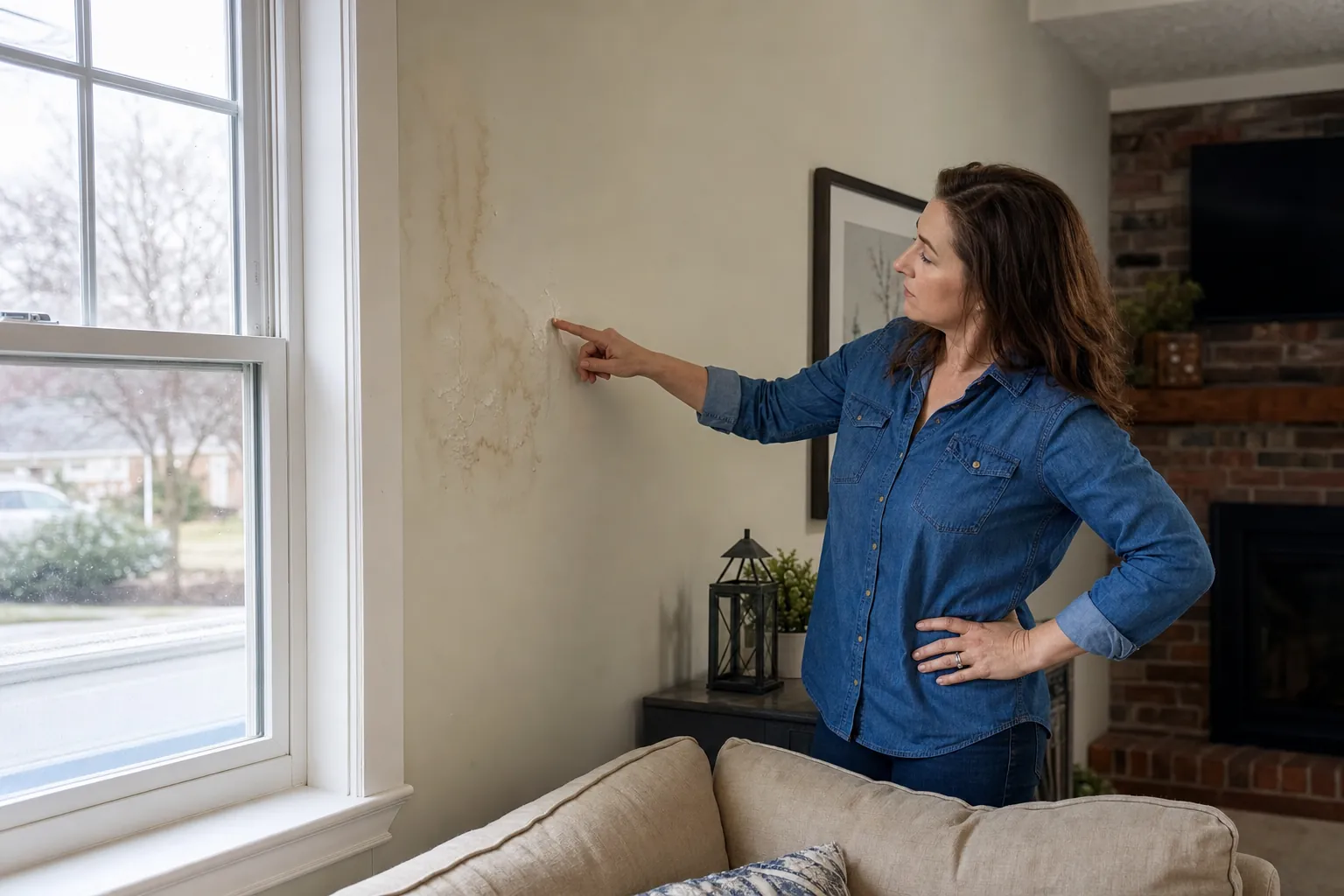
Water damage in walls does not always begin with an obvious stream or a dramatic ceiling stain. It can start as a yellow or brown shadow, a patch of paint that looks darker than the surrounding area, a new ripple in the finish, or a section that seems cooler or softer when you gently press nearby. Drywall paper can bubble or separate when it has been wet. Baseboards may swell, pull away, or show a thin line of discoloration at the top edge. A musty smell in one room can be another reason to look more closely.
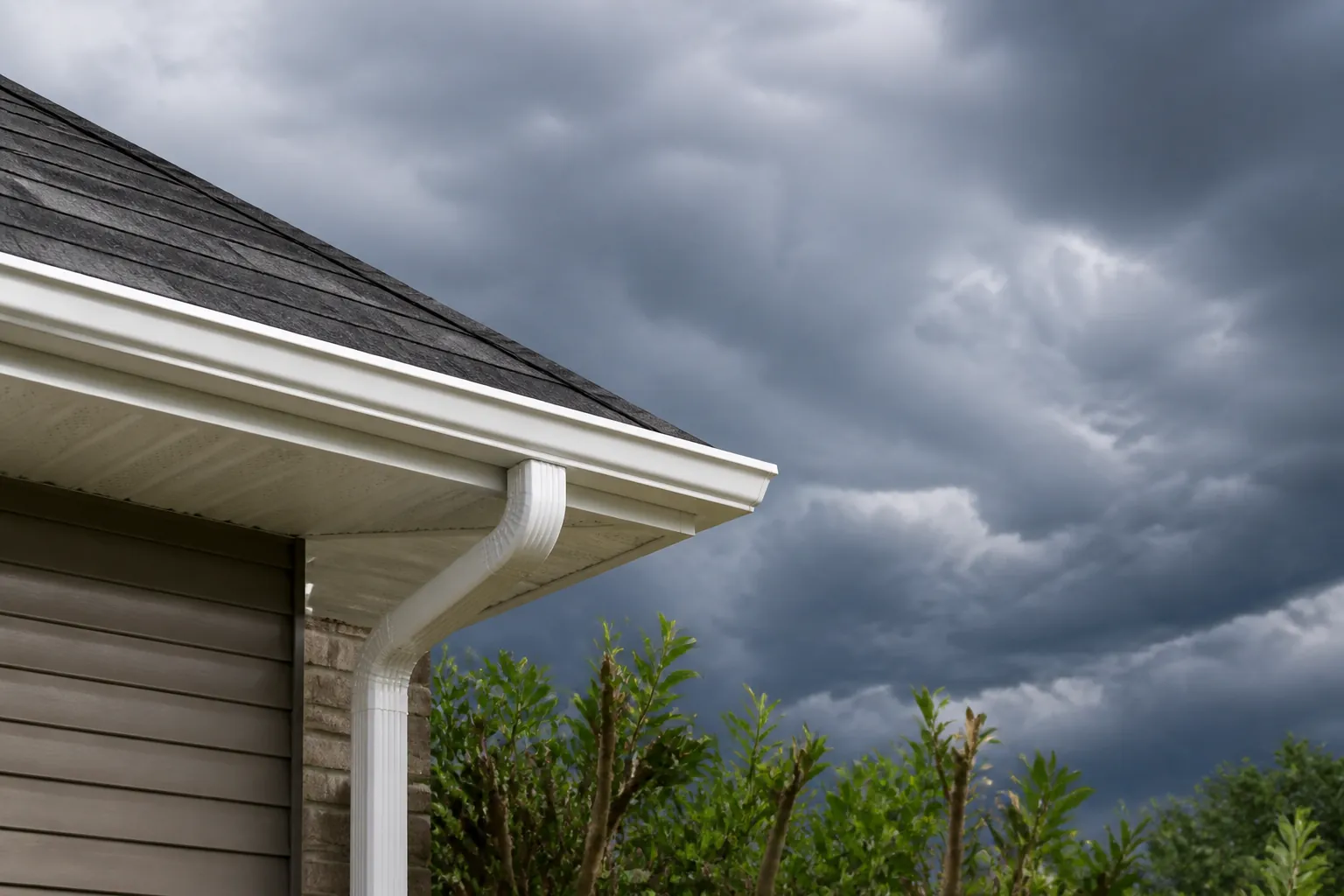
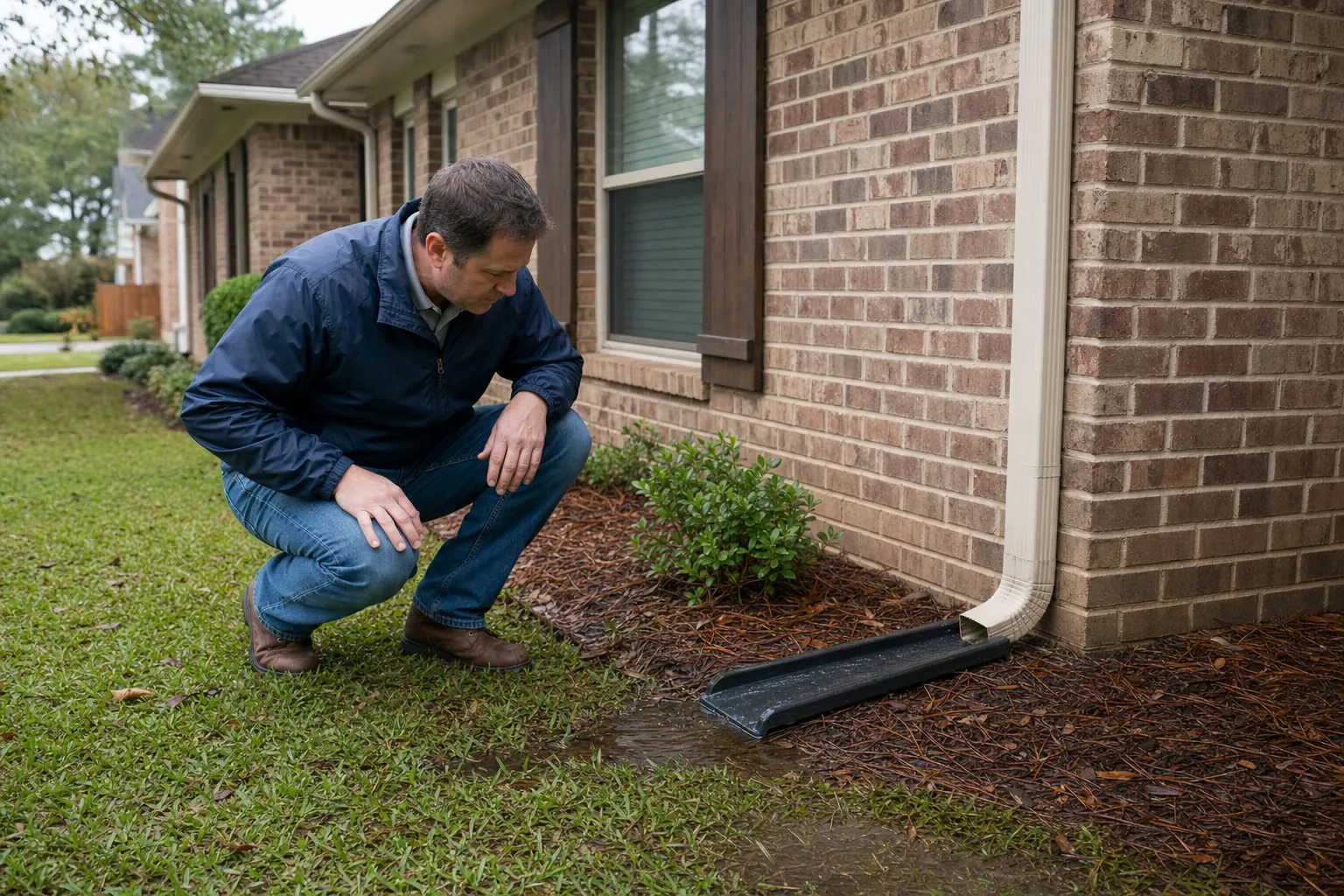
Notice the location. A stain below a window may point to failed caulk, trim, flashing, or wind-driven rain. Damage near a bathroom, kitchen, laundry room, refrigerator, or water heater may be connected to plumbing or an appliance line. A mark at the top of a wall or on a ceiling can relate to a roof leak, attic condensation, or a bathroom above. Near an exterior wall, overflow from gutters or a downspout that keeps water against the house can contribute to the problem over time.
Try not to decide the cause from the stain alone. Water can travel along framing, pipes, and the back of drywall before it shows itself. The visible spot may be below or beside the original entry point. Take a clear photo from across the room and another close-up. Then note the date, recent weather, whether the stain changes after a shower or appliance cycle, and whether the area feels damp. Those details make the next conversation much more useful.
Sort the signs by urgency
Some wall damage can be watched briefly while you arrange a repair. Other signs call for faster action. An active drip, a wet wall near an outlet or electrical panel, a ceiling that is sagging, or a large area of wet drywall should be treated as urgent. Turn off water at the fixture or the home's main shutoff when it is safe and appropriate, keep people clear of the area, and get qualified help. Do not open a wall around electrical wiring or try to dry a dangerous area with household equipment.
For a smaller mark, look for evidence that the condition is changing. Fresh paint bubbling, a stain that grows after rain, soft drywall, cracked seams that return, or trim that becomes spongy all suggest that moisture may still be active. In that situation, waiting for the stain to dry on its own is not a repair plan. The source has to be found first.
If the damage looks old but dry, you still need to understand why it happened. A previous leak may have been fixed properly, or it may be quiet until the next storm, a full bathtub, or a humid week. A wall that stays firm, dry, and unchanged can sometimes move to the repair stage. A wall that is swelling, crumbling, musty, or changing needs more investigation before it is covered over.
Find the source before fixing the finish
The repair that lasts is the one that stops water from returning. Start with the closest likely source, but keep an open mind. For damage near a window or exterior door, inspect the caulk, trim, siding joints, and the route water takes off the roof. Open joints, loose trim, peeling paint, and gutter overflow can give water a path behind the exterior finish. B&B's gutter installation and repair work can help when drainage is part of the problem rather than a simple cleaning issue.
For a bathroom, kitchen, laundry area, or wall near a refrigerator, check for drips at visible supply lines, shutoff valves, drains, and appliance connections. Look under the nearby sink and around the floor, but do not assume a dry cabinet means the wall is fine. Some plumbing leaks only show when a fixture is used. A note such as "the stain darkens after the upstairs shower" is more helpful than guessing which pipe is behind the wall.
Roof and exterior leaks can be harder to trace because water may move before it reaches the room below. Look for missing or damaged trim, failed caulk, loose flashing, blocked gutters, downspouts that have come loose, and branches rubbing the roof. Keep the inspection at ground level unless you have safe access and the right experience. Wet roofs, high ladders, and hidden roof damage are not places to experiment. B&B's home-repair service is a practical place to start when the issue involves several exterior details or the source is not obvious.
Dry the area promptly, but do not hide the evidence
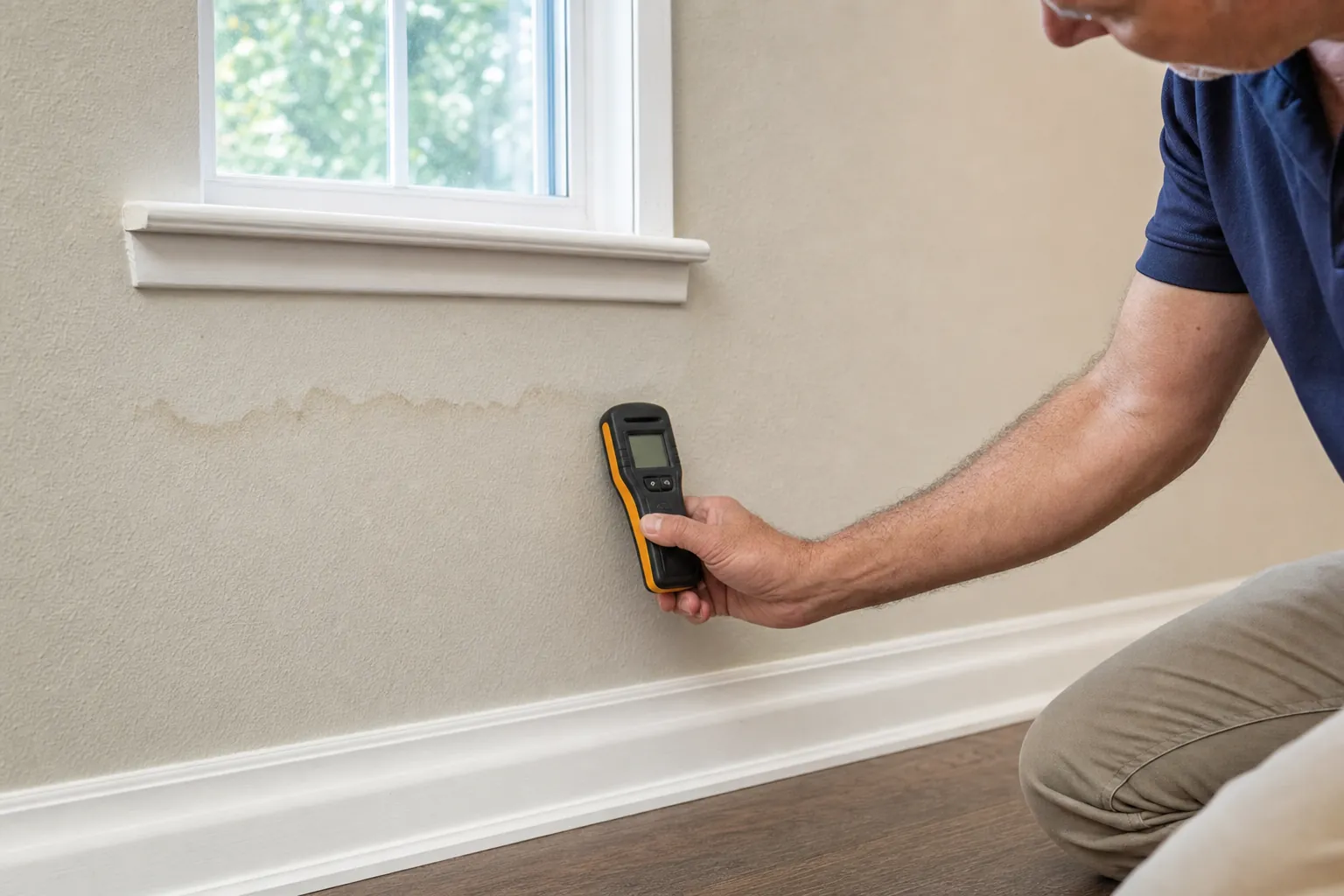
Once the source is stopped, move wet rugs, furniture, or stored items away from the wall so air can circulate. Use fans and dehumidification only when the area is safe to enter and there is no electrical hazard. Keep the room ventilated where practical, and check the affected material again rather than assuming a dry-looking surface means the wall cavity is dry. Take photos before removing or covering anything, especially if the damage may need to be discussed with an insurer, landlord, or another professional.
The U.S. Environmental Protection Agency advises acting quickly after a leak or spill. Its guidance notes that wet or damp materials dried within 24 to 48 hours will usually avoid mold growth. That is useful timing guidance, not a promise that every wet wall can be saved. The amount and type of water, how long the area stayed wet, the materials involved, and whether the wall cavity can dry all matter.
Do not paint over a stain, caulk the edge of a wet wall, or reinstall wet baseboard just to make the room look finished. Those steps can trap the question behind a fresh surface. If drywall is visibly swollen, the paper facing is loose, seams are lifting, or the area remains damp, the wall needs to be assessed before repair. The EPA's drywall guidance explains that drywall may sometimes dry in place when there is no obvious swelling and the seams remain intact, but damaged material may need removal.
Decide whether the drywall can stay
Drywall is not automatically ruined by every small leak. A limited area may be repairable if the source has been fixed, the wall is dry, the drywall remains firm, the seams are intact, and there is no sign that the paper facing has pulled loose. The first task is still to confirm that it has truly dried. A repair professional may use a moisture meter and compare the affected wall with an unaffected nearby area before deciding what stays.
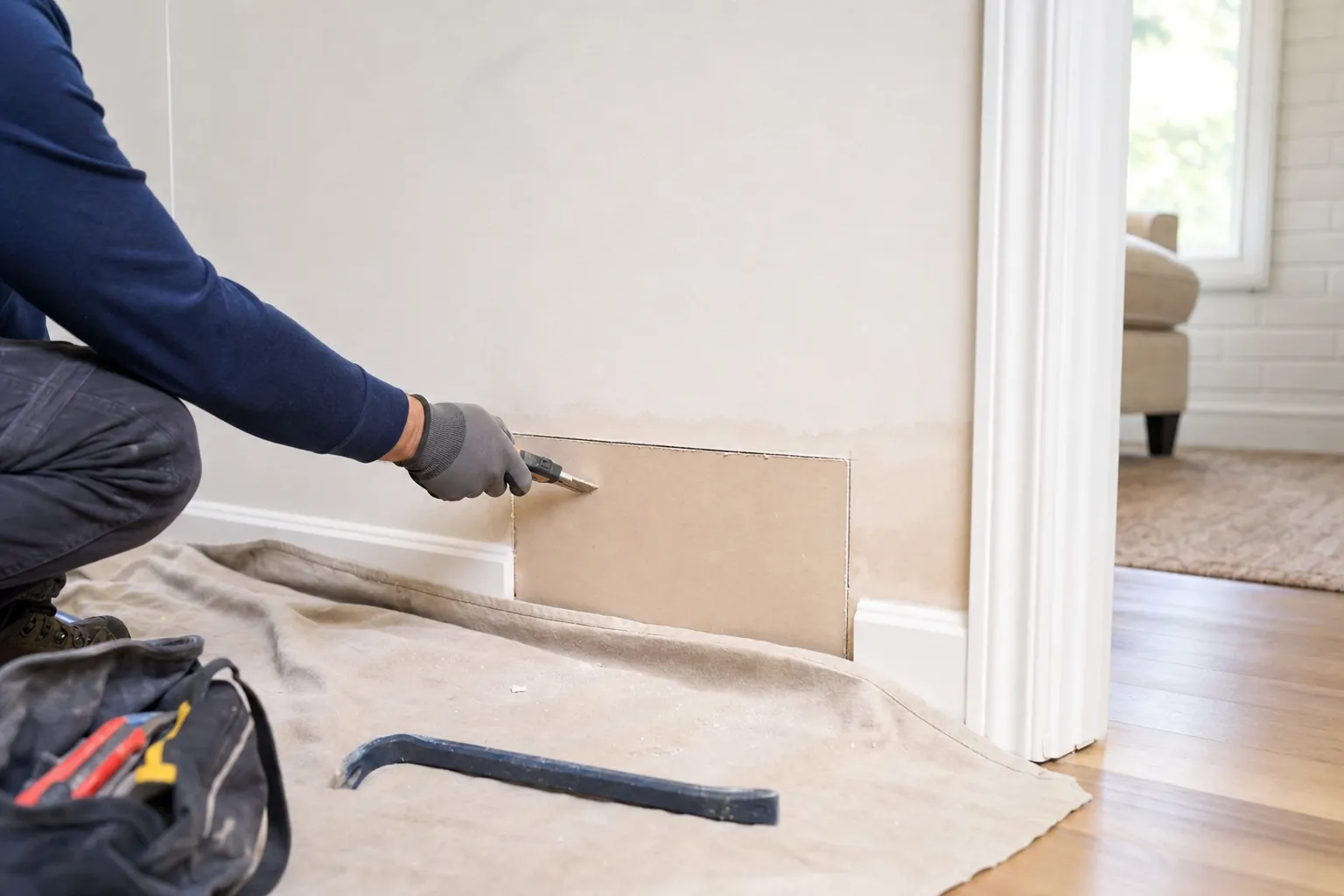
Replacement becomes more likely when drywall is soft, swollen, crumbling, sagging, or visibly separating at seams. The same is true when water has affected the bottom of the wall for an extended period, baseboards are swollen, insulation may be wet, or the condition keeps coming back. A cut-out section can reveal whether the back of the drywall, framing, or wall cavity needs attention, but it should only happen once the area can be handled safely and the likely cause has been addressed.
Water that came from a clean supply-line leak is different from water affected by sewage, a major flood, or a source that may be contaminated. Larger events, visible mold, and water of uncertain quality are not simple cosmetic repairs. Get the appropriate restoration, remediation, plumbing, roofing, or electrical help rather than treating the wall like an ordinary patch job.
Repair the whole area, not just the hole
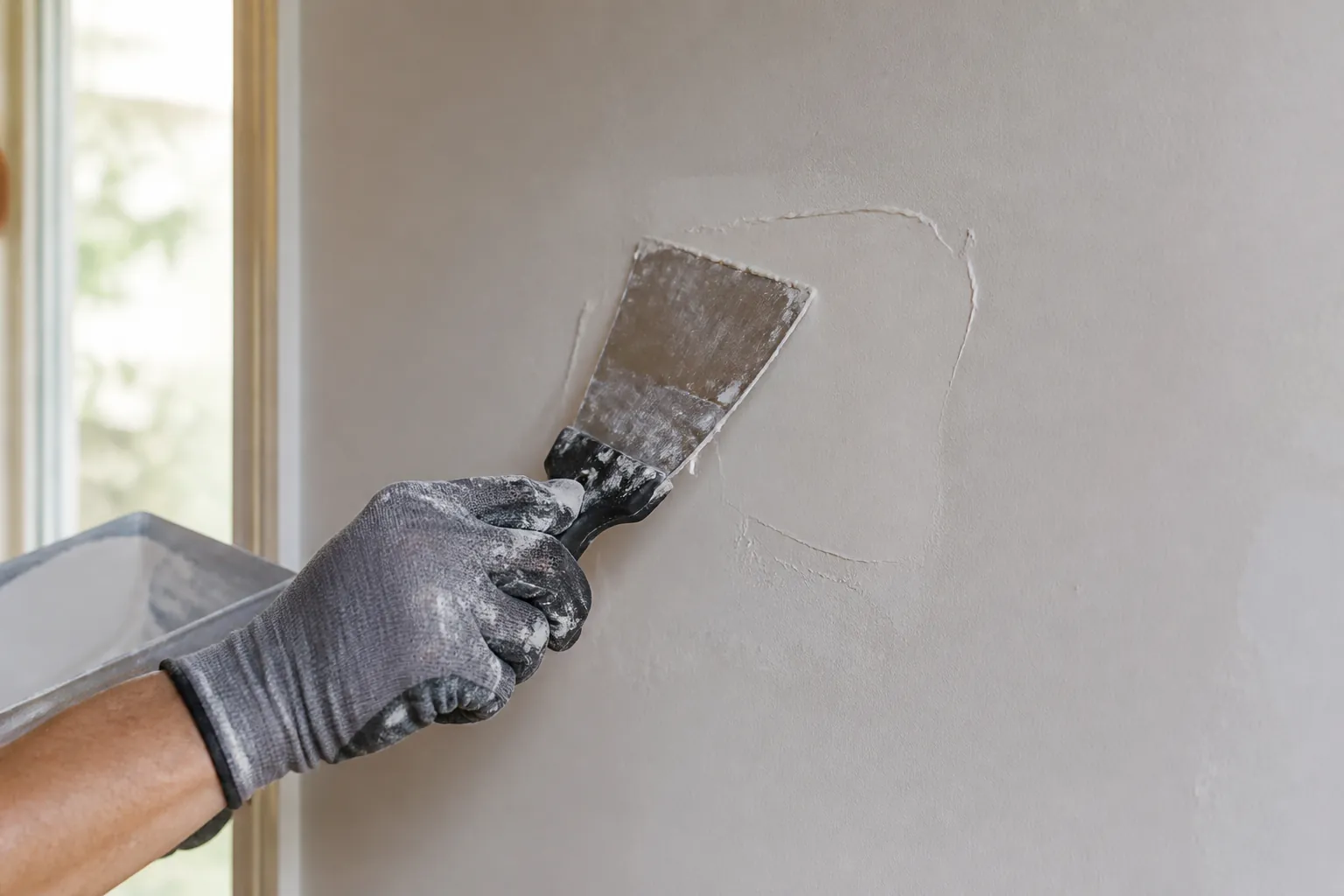
Once the source is fixed and damaged material has been handled, the finish work can begin. A durable wall repair may include replacing affected drywall, securing backing where needed, taping seams, applying joint compound in thin coats, sanding, priming, repainting, and reinstalling or replacing damaged trim. Texture matching and paint blending can affect how seamless the final repair looks, especially on an older wall or in a room with strong daylight.
It is also worth looking at what touches the wall. Water near flooring may have affected transitions, baseboards, or the subfloor. Water near a window may have left trim or exterior caulk exposed. A stain caused by a small plumbing leak may leave the wall looking fine while the cabinet bottom or floor behind it still needs attention. Grouping the connected work usually produces a cleaner result than repairing one visible surface and leaving the cause nearby.
For Tupelo and North Mississippi homeowners, a clear quote should explain what has been found, what is being repaired, and what might need a separate specialist. B&B can help with the practical parts of the repair list, including drywall, trim, paint touch-ups, and related carpentry after the underlying source is understood. When the work calls for a particular trade, the right next step is a specialist, not a guess.
Know when to bring in help
Call for professional help when the source is unclear, the damage is spreading, the wall is soft or swollen, water is near electrical equipment, or the same area keeps becoming wet. A roof leak, plumbing leak, failed window detail, or drainage problem can turn into repeat drywall repairs when the cause is missed. It is also sensible to ask for help when the work requires opening a wall, working at height, handling suspected mold, or restoring a room so it looks finished again.
When you reach out, include the room, the location of the damage, what changed, when you first noticed it, and whether the stain reacts to rain, plumbing use, or humidity. Share a wide photo and a close-up. Mention any repair that was attempted before. Those details help separate a focused drywall repair from a problem that needs more investigation.
If the problem is limited and you are ready to talk through next steps, B&B's simple request process makes it easy to start with the facts you have. You can also request a free quote for a practical repair plan for your home. The goal is not to turn a small mark into a major project. It is to stop the moisture, protect the home, and make the finished repair hold up.
A quick water-damage checklist
- Document it: Take wide and close photos, then note when the stain appeared and what seems to trigger it.
- Look for the source: Check nearby plumbing, windows, gutters, roof edges, appliances, and exterior drainage.
- Stop active water: Shut off the fixture or water supply when safe, and keep water away from electrical equipment.
- Dry safely: Move nearby belongings, ventilate, and use drying equipment only when the area is safe.
- Do not cover it early: Wait to paint, caulk, or patch until the source is fixed and the wall is dry and stable.
- Get the right help: Bring in a professional for unclear sources, soft walls, large areas, repeated moisture, electrical risk, visible mold, or work beyond a safe repair.
Water damage is easier to manage when it is treated as a source-and-condition problem instead of a stain. A few good observations, a prompt response, and the right repair order can protect the wall, the room around it, and the time you would otherwise spend fixing the same spot twice.
Frequently Asked Questions
Water Damage in Walls FAQ
Can water-damaged drywall be repaired?
Sometimes. Drywall may be repairable when the area is dry, stable, and the paper face and seams remain sound. Swelling, crumbling, loose material, or unresolved moisture can make removal the better long-term choice.
How can I tell if water damage in a wall is active?
New or spreading stains, dampness, soft drywall, peeling paint, a musty odor, or a change after rain or appliance use can indicate that moisture is still present. Find and stop the source before cosmetic work.
How long should I wait before repairing a wet wall?
The wall should be dry and the source should be corrected before it is repaired. The U.S. Environmental Protection Agency advises acting quickly after leaks or spills and notes that wet or damp materials dried within 24 to 48 hours will usually avoid mold growth.
Should I paint over a water stain?
Not until the source is corrected and the area is fully dry and stable. Primer and paint can improve the finish after a repair, but they cannot solve active moisture behind the wall.
When should I call a professional for water damage?
Call for help when the source is unclear, the wall is soft or swollen, water is near electrical equipment, the damage is widespread, there is visible mold, or the same spot keeps getting wet after a basic repair.