
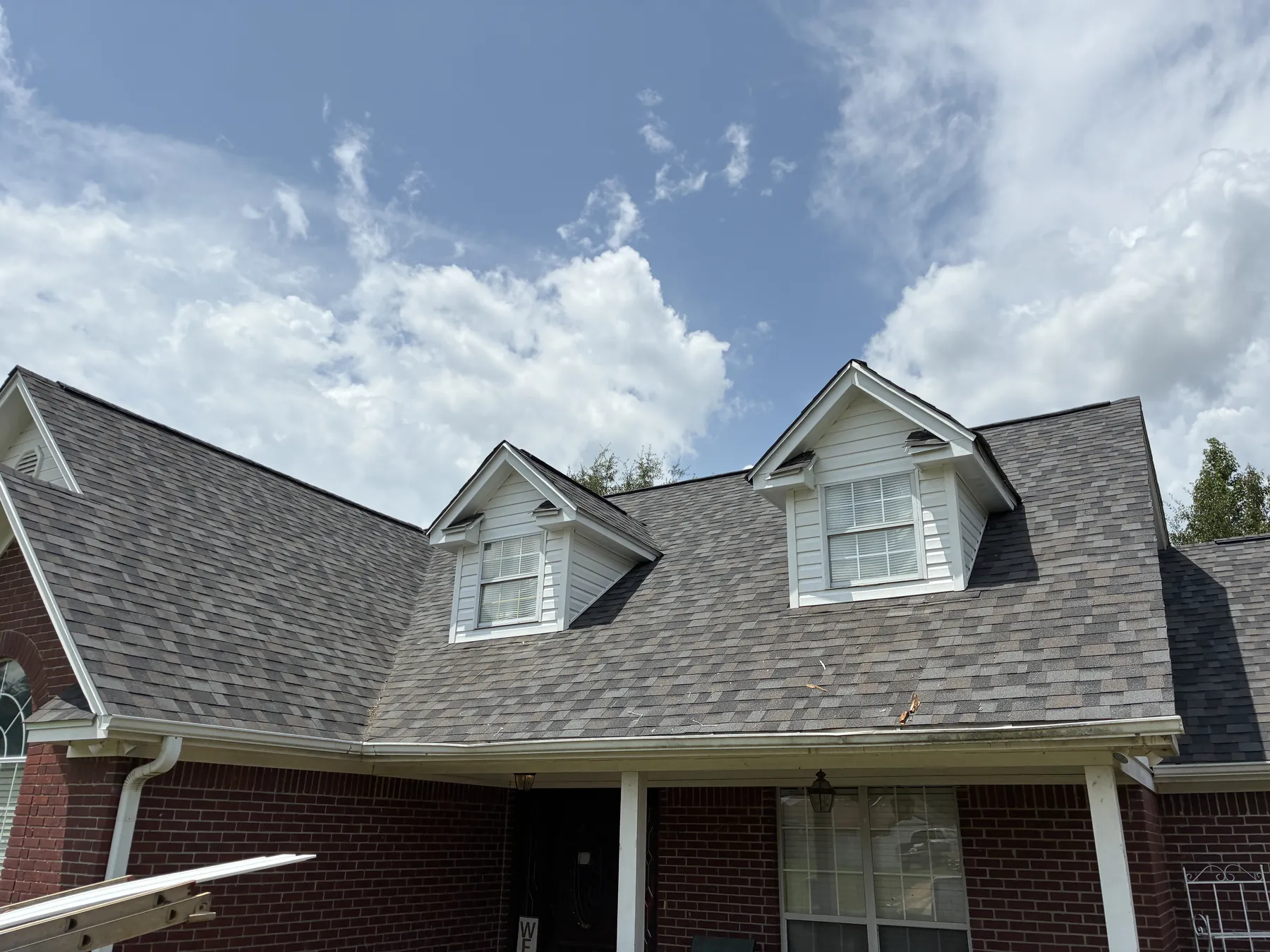
A hard rain, gusty wind, or falling branch can leave a gutter looking worse than it is. It can also expose a loose section, blocked outlet, or weak fascia board that was already close to failing. The useful first move is not to rush for a ladder. It is to protect people, notice where water is going, and separate a true hazard from a repair that can be planned carefully on a dry day.
This guide helps North Mississippi homeowners make that first call without guessing. It does not replace an inspection. It gives you a practical way to document the problem, protect the home from avoidable water damage, and know when the condition calls for immediate outside help.
1. Check for danger before you check the gutter
Begin from a safe spot on the ground. If a gutter, branch, or downspout is near a power line, stay clear and contact the utility provider. Treat every overhead line as live. The Consumer Product Safety Commission’s ladder and electricity guidance warns that overhead wires may not be insulated and that a ladder can create a serious shock hazard.
Keep people, pets, and cars away from a section that is loose above a doorway, porch, driveway, or walkway. Do not tug it back into place or lean a ladder against it. A partly attached gutter can pull more material loose or reveal soft wood behind the fascia. If water is entering through a door, window, or ceiling, move belongings away from the wet area and use simple indoor containment while you arrange the next safe step.
Do not go outside while lightning is active. NOAA’s lightning safety guidance says to get into a substantial building or enclosed vehicle when you hear thunder and wait at least 30 minutes after the last thunder. A gutter repair can wait. A lightning strike or ladder fall is not a trade worth making.

2. Make a ground-level storm damage record
Photos do two jobs after a storm. They help a repair professional understand what changed, and they preserve a clear record before debris is moved or a loose piece shifts again. Start with a wide photo of the entire side of the home. Then take closer photos of the problem area, the downspout, the fascia or trim behind it, and the ground where the water lands. A short video during rain can be helpful when it can be taken safely from cover or the ground.
Write down the date of the storm and what you saw: a branch strike, a loud bang, a new sag, a downspout that came loose, water rushing over the edge, or a fresh wet spot inside. Avoid deciding the cause from a single photo. A leak at one corner can be a damaged joint, but it can also be water backing up from a blocked outlet or running behind the gutter at the roof edge.
Look at the ground as carefully as the roofline. Fresh mulch washout, a deep splash mark, wet siding, or water collecting beside the wall shows where the gutter system is no longer controlling runoff. B&B’s guide to downspout drainage can help you follow that path without assuming a buried drain or a major project is needed.
3. Separate a hazard from a repair that can be scheduled
Not every storm-marked gutter is an emergency. A dent, a loose end cap, or a slow drip deserves attention, but it is usually not the same as a component that may fall or water that is getting inside. The priority rises when a section hangs over an area people use, a limb or gutter is near a service line, or runoff is entering the home instead of being carried away.
A detached downspout may not be a falling hazard, but it can still concentrate roof water at the foundation, doorway, porch, or planting bed. A gutter overflowing only during a heavy rain may point to a blockage or a drainage restriction. Read B&B’s guide to why gutters overflow to see the difference between a clogged outlet, a shifted run, and water missing the gutter altogether.
When you are unsure, describe the condition rather than trying to label it. “The rear corner is hanging above the side gate” or “water is pouring onto the porch threshold” is more useful than guessing whether the repair is minor. Clear information helps put safety and water control ahead of appearances.

4. Look for the storm clues that change the repair
Storms can damage a gutter system in more than one way. Strong wind can pull at the front edge of a run or loosen the fasteners that hold it to the fascia. A falling branch can bend a section, open a seam, crush a downspout elbow, or knock an extension out of place. Heavy rain can pack roof grit and leaves at an outlet, making a gutter appear damaged when the immediate problem is a blockage.
From the ground, look for a run that suddenly appears wavy, lower in one spot, separated from the roof edge, or tilted away from its usual line. Notice new daylight between the gutter and fascia, a downspout that no longer follows the wall, or an end cap that looks open. A dark stain, peeling paint, or soft-looking trim behind a loose section can mean the supporting material needs as much attention as the metal in front of it.
Do not assume a fresh sealant bead is the answer to every drip after a storm. If the gutter moved, holds water, or pulled loose from weakened wood, sealing only the visible opening can postpone the real repair. The article on gutter seam repair explains when a focused reseal may fit and when the entire connection needs a closer look.
5. Protect the water path while you wait for repair
Once the area is safe, the short-term goal is to keep water from repeatedly landing in the wrong place. Watch the next ordinary rain from indoors or the ground. Is water reaching the bottom of the downspout? Is it washing mulch onto a walkway? Is it running against siding, a door threshold, or the foundation? These details help determine whether the repair needs to address only a loose component or the whole route from roof edge to yard.
Do not climb to clear a high gutter after a storm, and do not use a ladder on soft ground, in wind, or near wires. The National Oceanic and Atmospheric Administration’s post-storm safety advice also calls out downed lines, sharp debris, and damaged structures as hazards that can remain after the sky clears. A photo from the yard is a better first tool than an improvised repair at height.
If accessible from the ground, keep the lower outlet free of leaves, mulch, and objects that block the discharge. Then leave the high work and any loose gutter hardware alone. The goal is not a temporary repair that looks finished. It is preventing a small water problem from becoming damaged trim, stained walls, or a slippery entry.

6. Know when repair may turn into replacement
A focused repair can be the right answer when the surrounding gutter is sound and the problem is limited to a connection, end cap, downspout, hanger, or small damaged section. A repair visit can assess whether the run still drains properly, whether fasteners have solid material to hold, and whether water continues away from the home after it leaves the downspout.
Replacement becomes more likely when a long section is creased or badly bent, several joints are failing, the gutter has repeated low spots, or the fascia behind it is soft or deteriorated. The same is true when a repair has been attempted before and water keeps finding the same route. The right answer depends on the condition of the full run, not just the most visible mark from the storm.
That is why it helps to include the roofline, corner, downspout, and ground below in your photos. A complete picture makes it easier to decide whether a limited repair is sensible or whether gutter installation and repair help should include the supporting trim and drainage path too.
How B&B can help after a storm
For homeowners in Tupelo and across North Mississippi, B&B can help assess gutters, downspouts, roof-edge trim, exterior water paths, and the visible effects of a storm on those connected details. The conversation starts with what you can safely see, not with a pressure-filled guess about replacement.
Use a free quote request to share wide and close photos, the side of the home, the storm date, and a short note about where the water goes. If the damage is near a utility line, actively entering the home, or creating an immediate danger, handle that safety issue first through the appropriate utility or emergency service.
A good repair plan should explain whether the goal is to re-secure a loose section, restore a downspout connection, correct a water path, repair supporting trim, or replace material that can no longer do the job. That keeps the response practical and gives you a clear next step after a stressful weather event.
Post-storm gutter checklist
- Stay on the ground: Do not inspect a loose gutter from a wet or windy ladder.
- Check for wires: Keep clear of anything near a power line and contact the utility provider first.
- Protect the area below: Move people and cars away from hanging sections.
- Document what changed: Take wide and close photos before anything shifts or is cleaned up.
- Follow the water: Look for overflow, wet trim, washed-out mulch, and water near doors or the foundation.
- Describe, do not guess: Note what is loose, where water lands, and when the change began.
- Arrange the right repair: A small fix is useful only when the gutter, fascia, and outlet are still sound.
Storm damage is easier to manage when safety and water control come first. Keep the area clear, document the condition from the ground, and use the full water path to guide the repair conversation. That is the calmest way to move from a worrying roofline to a useful plan.
Frequently Asked Questions
Gutter Repair After a Storm FAQ
What gutter damage needs attention right after a storm?
Keep people clear and get prompt help when a gutter or downspout is partly detached, hanging over a door, driveway, or walkway, touching or close to a utility line, or sending water into the home. A bent corner, slow seam drip, or cosmetic dent can usually be photographed and scheduled once the area is safe and dry.
Should I climb up to inspect gutters after a storm?
No. Start from the ground. Wet ground, wind, loose gutters, and nearby overhead lines make a ladder a poor first response. Take wide photos of the roofline and closer photos from a safe distance, then arrange an inspection when the weather and access are safe.
Can a storm-damaged gutter be repaired instead of replaced?
Often, yes. A loose connection, damaged downspout, failed end cap, or small section may be repairable when the surrounding gutter, hangers, and fascia remain sound. Replacement is more likely when a long run is badly bent, several sections are failing, or the wood behind the gutter cannot securely support it.
What photos help with a gutter repair quote after a storm?
Take one wide photo of each affected side of the home, then closer views of the loose section, downspout, nearby trim, and ground below. Include the area where water lands and note the storm date, what changed, and whether water enters the home or collects near a doorway.


