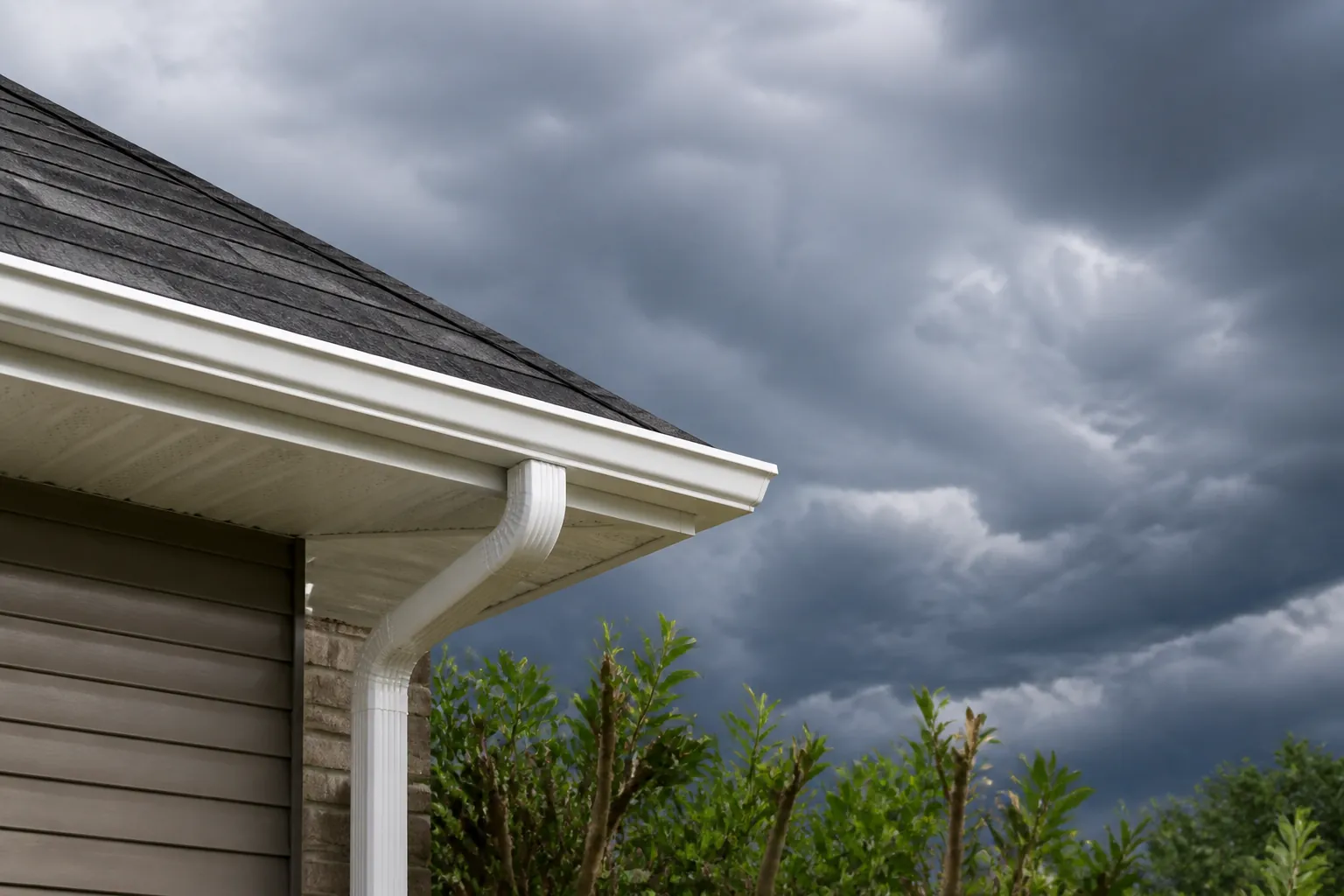

A gutter that spills over in the same place is telling you something. The answer may be leaves, but overflow can also point to a clogged downspout, a gutter section that has shifted, water missing the gutter at the roof edge, or a drainage path that is failing after the water reaches the ground. The useful first step is to notice where the water is escaping and what changes after rain. You do not need to climb onto the roof to begin narrowing it down.
1. Leaves and roof grit are blocking the outlet
The most familiar cause of gutter overflow is debris, but it is often not a thick layer spread evenly across the whole run. Leaves, small twigs, seed pods, pine needles, and roof grit tend to collect where the gutter meets a downspout. Water carries loose material toward that outlet, where it can pack together and form a dam. Once the opening is restricted, water builds up behind it and spills over the front edge or runs behind the gutter.
Look from the ground for leaves sitting high in the gutter, a dark wet line under the roof edge, or a corner that turns into a waterfall during an ordinary rain. If you can safely see the top of the outlet, watch for debris gathered around it. A gutter can look clear from one side of the house while the inside corner near a downspout is holding enough material to stop the flow.
Keep the work sensible. A ground-level inspection and accessible cleanup can tell you a lot, but a roof edge or high gutter is not the place to stretch, lean, or improvise. The U.S. Consumer Product Safety Commission's ladder-safety guidance is clear about level footing and careful setup. When the access is unsafe, photos and a short description are a better first move than trying to reach one more section.
2. The downspout is clogged or restricted
A gutter cannot drain when its downspout is blocked. The water may enter the gutter normally, but it backs up when it reaches the outlet and has nowhere to go. The result can look exactly like an overfilled gutter, even after the visible leaves have been removed. Clogs can collect at the top opening, in an elbow, or farther down where you cannot see them from the ground.
During a safe, steady rain, stand back and watch whether water is leaving the bottom of the downspout. If the gutter is overflowing but little or no water comes out below, the downspout deserves attention. Also look for a lower elbow that has come loose, an extension flattened by yard work, or mulch and grass packed around the outlet. These issues can interrupt the flow without looking dramatic on a dry day.
Do not assume a splash at one joint means the entire downspout must be replaced. A loose connection may be a focused repair. But repeated backup, crushed sections, or a blockage that cannot be reached safely needs more than a quick rinse. The important thing is to correct the water path, not just hide the spot where it escaped.

3. The gutter has lost its slope
Gutters are installed with a slight fall toward the downspout. That small change in height gives rainwater a path through the run. If a section sags, pulls away, or settles out of line, water can sit in the low spot instead of moving toward the outlet. In a hard rain, the backed-up water may spill over at the low area even though the downspout itself is clear.
From the yard or driveway, look along the gutter line rather than at one point. A run that appears wavy, droops in the middle, or looks noticeably lower near a joint may not be draining as intended. Watch for water marks on the fascia, fasteners that are pulling away, or a section where paint is peeling sooner than the surrounding area. Those can be signs that water has been lingering where it should not.
A slope problem is not a cleaning issue. Clearing leaves may give temporary relief, but it will not change where the gutter holds water. A repair may involve securing the gutter, correcting the run, and checking the material behind it. When the nearby fascia or soffit has softened, the repair needs to account for that condition too.
4. Water is running behind the gutter
Overflow does not always come over the front lip. Sometimes rainwater slips behind the gutter and runs down the fascia or siding instead. This can happen when the gutter has pulled away from the roof edge, a section is loose, flashing is not directing water into the gutter, or a roof detail is sending water past the system. From the ground, you may notice a dark line below the gutter, staining on trim, or water appearing on the wall even when the gutter itself does not look full.
Pay close attention near roof valleys, corners, and areas where shingles, trim, and gutter hardware meet. These are places where a small gap can let a lot of water escape in a heavy rain. A visible stain does not prove the source by itself, but it is a reason to look at the roof edge, gutter connection, and nearby materials together rather than treating the gutter as an isolated piece.
If water has reached a wall or ceiling indoors, stop short of cosmetic repair until the water path is understood. B&B's guide to signs of water damage in walls explains why a dry, stable surface matters before patching or painting. The same principle applies outside: correct the path first, then repair the finish.

5. One roof area is sending too much water to a short run
Some gutters overflow because of the way the roof concentrates water. A valley can send runoff from two roof planes into one short section. A long roofline may deliver more water to a single downspout than that outlet can move during a hard storm. The gutter may look fine during a light rain and then spill in the same place whenever the weather turns heavy.
This is why it helps to note the conditions when overflow happens. Does it occur after a few minutes of any rain, only during a downpour, or only where two roof slopes meet? Does the rest of the gutter line work while one corner fails? Those details help separate a basic debris problem from a design, slope, or outlet issue.
A bigger storm does not automatically mean the entire gutter system is wrong. But a repeat overflow at a valley or one corner deserves a closer look. Adding a cleaning date may not change a section that needs adjustment, a better outlet, or repair to the surrounding roof-edge details.
6. The gutter, fascia, or fasteners are loose
Gutters need secure support to keep their shape and carry water. When fasteners work loose, fascia has deteriorated, or a gutter run starts pulling away from the house, the system can tilt or open a gap at the roof edge. That affects both the slope and the way water enters the gutter. You may see sagging, a seam that has separated, a gutter that sits lower than the next section, or an area where water has stained the board behind it.
Do not simply caulk over a gap or paint over soft exterior wood. Those steps can make the surface look better for a while without fixing the reason water is reaching it. The condition behind the gutter matters. A sound repair looks at the attachment, the fascia or soffit around it, and the path the water will take once the gutter is back in position.
Look for clues you can safely see: a gutter that moves in wind, a downspout that has separated from the wall, darkened trim, fasteners that have pulled loose, or a gutter line that no longer looks straight. Clear photos from across the yard and closer to the problem area will make the first repair conversation much more useful.
7. The water leaves the downspout but returns to the house
Even when the gutter and downspout are open, the job is not finished until the water has a clear route away from the home. A short outlet, disconnected extension, buried splash block, or low spot beside the wall can turn a working gutter into water at the foundation, porch, siding, or landscaping. The system may not overflow at the roof edge, but the drainage problem still needs attention.
After rain, look at the ground below each downspout. Notice washed-out mulch, a trench in the soil, water crossing a walkway, or damp ground that lingers beside the house. These signs are especially important when the same exterior wall has peeling paint, soft trim, or water marks inside. The water may be leaving the roof, but it may still be ending in the wrong place.
The National Weather Service advises waiting at least 30 minutes after the last thunder before returning outdoors. Once conditions are safe, a quick walk-around after a storm is enough to spot most drainage changes. You are not trying to diagnose every part of the system. You are gathering the details that show where the water is going.

What to check before the next rain
Start with a safe, ground-level walk. Look for visible debris, downspouts that have shifted, gutter sections that sag, staining below the roof edge, and water marks near the wall. Then, when weather is calm enough, look again during or after a normal rain. The pattern matters more than one dry-day snapshot.
- Find the exact spill point: Note whether water comes over the front, behind the gutter, or from a downspout joint.
- Watch the outlet: If the gutter fills but the downspout is not discharging, suspect a restriction in the downspout path.
- Look along the run: A sagging or uneven section may be holding water before it reaches the outlet.
- Check the nearby exterior: Look at fascia, soffit, trim, siding, and the ground for fresh signs of water.
- Take two photos: One wide view puts the problem in context, and one close view shows the damaged or overflowing area.
When B&B can help
For homeowners across North Mississippi, B&B can discuss gutter and downspout problems alongside the trim, fascia, soffit, roof edge, and drainage details around them. That matters because a recurring overflow is often not just a leaf-removal job. It may be a loose connection, a failing section, water getting behind the gutter, or an exterior repair that needs to be handled in the right order.
Explore B&B's gutter installation and exterior drainage work for the kinds of gutter and downspout details that can be addressed. If the water issue has also affected other areas of the home, the home repair services page is a useful place to see the wider range of projects B&B can discuss. When you are ready, request a free quote with photos of the overflowing spot and a note about what happens during rain.
Frequently Asked Questions
Gutter Overflow FAQ
Why do my gutters overflow in heavy rain?
Heavy rain can expose a gutter that is partly blocked, holding water because of an improper slope, or sending water into a downspout that cannot move it through. A roof valley can also concentrate water in one short section. If only one area overflows again and again, the location of the overflow is an important clue.
Why do gutters overflow when they look clean?
The visible trough may look clear while a blockage sits at the downspout outlet, in an elbow, or lower in the downspout. Overflow can also come from a loose section, a seam leak, water running behind the gutter, or a gutter that has shifted out of position.
Can a clogged downspout cause gutter overflow?
Yes. When water cannot leave through the downspout, it backs up in the gutter and eventually spills over the front or rear edge. A safe ground-level check can show whether water is coming out at the bottom as expected, but a blockage higher in the system may need professional clearing.
Should I replace gutters that overflow?
Not always. A focused repair may be enough when the issue is an obstruction, loose downspout, failed connection, or a section that needs adjustment. Replacement may make more sense when several sections are damaged, the system no longer fits the roofline, or repeated repairs are not solving the water path.
What should I photograph for a gutter repair quote?
Take one wide photo of the side of the home and one closer photo of the overflowing area. Include the gutter, downspout, nearby trim, and the ground where water lands. A short note about whether it happens in every rain or only during hard storms is useful too.