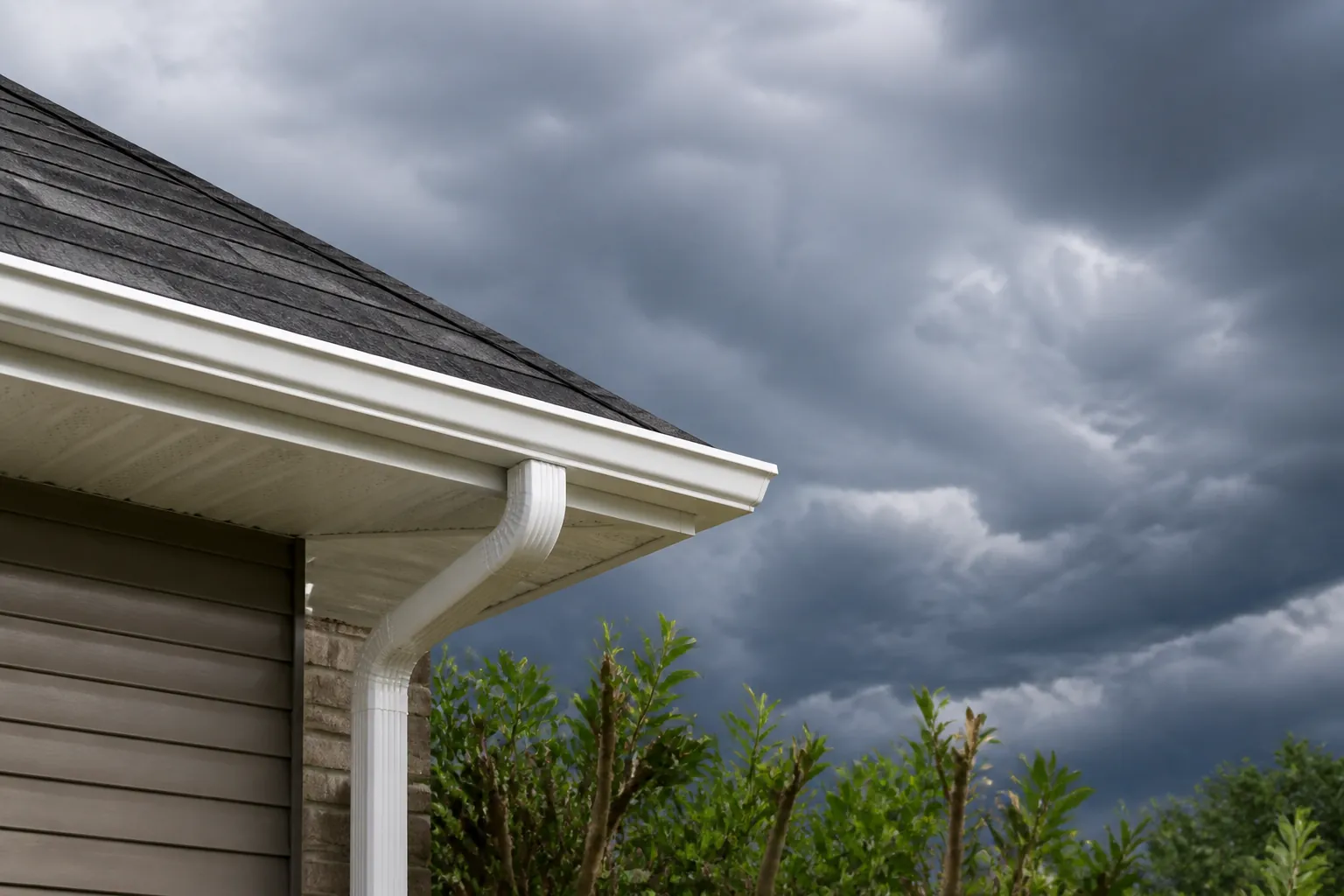

The best time to clean gutters is not one fixed day on the calendar. It depends on the trees near the home, the way the roof sheds debris, and whether rainwater is still moving where it should. For many North Mississippi homes, two planned checks make sense: one before the heaviest fall leaf drop and another after most leaves have come down. A few quick looks after major weather fill in the gaps. The goal is simple: keep a manageable maintenance job from turning into water against the house.
Start with the home, not a generic schedule
A twice-a-year gutter schedule is a useful starting point, but it is not a promise that every home needs the same care. A house surrounded by mature hardwoods can collect leaves quickly in the fall. A roof valley may concentrate debris in one gutter run. Pine needles and seed pods can settle in places that look clear from the driveway, especially around a downspout outlet. Meanwhile, a more open lot may need little more than seasonal checks and a look after wind-driven rain.
Use the first year of watching your home to set the right pace. Notice where leaves land, whether one corner overflows first, and whether water washes mulch or soil after a storm. Keep a short note on your phone or take a photo from the same spot after each season. You do not need a complicated maintenance log. A simple record helps distinguish a one-time mess from a part of the gutter system that is repeatedly struggling.
The important thing is to follow water, not just debris. A gutter can be free of leaves and still send water against the fascia, wall, porch, or foundation if a downspout is blocked, loose, poorly directed, or simply overwhelmed at one point on the roofline. B&B’s guide to maintaining gutters at home explains what to look for during a safe ground-level check.
Plan the first check before fall leaf drop
Late summer through early fall is a smart time to make sure the system is ready before the most leaves begin to collect. This is not always a full cleaning day. Start from the ground and walk the house. Look for a downspout that has come loose, an extension buried under mulch, a gutter section that appears to sag, or a roof edge where staining has developed. If the system has been quiet through summer, this quick check confirms you are starting the season with clear outlets and secure connections.
Focus on the points where debris tends to become a blockage: roof valleys, inside corners, elbows, and the top or bottom of a downspout. A few dry leaves at the roof edge are not a crisis. But a compacted pile, a gutter that is visibly full, or an outlet that holds water needs attention before repeated rain packs it tighter. When you know the system is ready ahead of the season, it is easier to notice a new problem later instead of guessing whether it was already there.
Keep the check realistic. The U.S. Consumer Product Safety Commission’s ladder-safety guidance emphasizes level footing and careful use. Do not stretch sideways from a ladder, climb on wet roofing, or turn a quick look into risky work. If the area cannot be reached safely, document what you see from below and arrange help.

Check again after most leaves are down
The second planned check often matters more than the first. A clean gutter in early fall can fill quickly as leaves continue to drop, especially after wind pushes debris across the roof. Waiting until every leaf is gone can mean water has already had several chances to carry a growing pile toward an outlet. The right timing is usually after the heaviest leaf drop in your yard, not after the last single leaf has fallen.
From the ground, look for the clues that the gutter is holding more than it should: leaves visible above the front edge, water marks on siding, new streaks below a seam, mulch that has been pushed aside, or a downspout outlet that no longer discharges freely. These signs tell you which part of the system needs attention. They are more useful than trying to judge the whole gutter line from one angle.
After a cleanup, take one more look when it rains. Water should move through the downspout instead of spilling over the front lip or escaping behind the gutter. When the same spot still overflows after accessible debris has been cleared, the cause may be a clogged downspout, a loose seam, an improper slope, or a roof-edge issue. That is a repair question, not a reason to keep repeating the same cleanup.
Use weather as a reminder, not an emergency
Strong rain and wind are useful reminders to inspect the property after conditions are safe. They can move leaves, expose a loose downspout, and show whether water is landing somewhere it should not. Wait until lightning has passed and the ground is stable. The National Weather Service advises waiting at least 30 minutes after the last thunder before returning outdoors. There is no benefit in checking a gutter while a storm is still active.
Once it is safe, walk the property and look for fresh overflow marks, debris at the base of a downspout, washed-out soil, displaced splash blocks, or water crossing a walkway. A short video from a protected, ground-level spot during an ordinary rain can be helpful too. It gives you a record of exactly where the water is escaping and whether the downspout is carrying the flow as expected.
Pay attention to change. A downspout that worked all summer but now sprays from an elbow may have shifted. A gutter that only overflows during a hard rain may have a blockage below the visible opening or a section that has lost its slope. A small new water path beside the foundation can be easier to correct now than after it repeatedly saturates the same area.

Let trees and rooflines set the pace
Homes with different surroundings need different schedules. Large deciduous trees can deliver a sudden flush of leaves over several weeks. Pines may shed needles and small twigs more gradually. A roof valley can funnel everything from two roof planes into one short gutter section. A long, straight run may stay clear while the inside corner by the garage becomes the recurring trouble spot. This is why a single “clean every six months” rule can miss what is actually happening at your home.
Start by naming the spots that deserve extra attention. It may be the gutter below the oak tree, the downspout at the back corner, or the run below the roof valley. During each ground-level walk-around, check those areas first. A targeted routine is easier to keep than treating the whole house as one giant job. It also makes it clearer when one location keeps needing attention because the system needs adjustment.
Gutter guards can reduce the amount of larger debris that enters some systems, but they do not eliminate the need for inspection. Fine material can still gather at the roof edge, on top of the guard, or where the gutter meets the downspout. Watch how your particular setup performs in rain. The real test is whether water moves freely away from the home, not whether the top of the gutter looks tidy from the lawn.
Watch where the downspout sends the water
Cleaning the gutter is only half the job. Once water reaches the downspout, it needs a clear route away from the exterior. Check that each downspout is secure, the lower elbow is open, and the outlet has not been covered by mulch, grass, or a shifted extension. Then watch the ground around it. If soil is washing out, mulch keeps moving, water runs toward the porch, or the area beside the foundation stays wet long after rain, make a note of it.
A splash block or extension can help direct water, but it must stay in place and slope away from the home. A loose extension that points uphill or a short outlet ending at the wall does not solve the underlying water path. Likewise, clearing a blockage will not fix a gutter that is pulling away from the fascia or a downspout that repeatedly comes apart during rain.
Take photos when you see an issue. One wide photo showing the wall and ground, plus one closer photo of the gutter or downspout, gives a repair conversation much better context. If water has also reached interior finishes, review the signs in B&B’s water-damage-in-walls guide before covering the stain with paint or patching drywall.

Know when cleanup has become a repair job
Routine care is about keeping accessible debris from becoming a blockage and watching how the water moves. Repair begins when the gutter system itself is failing or the same symptom keeps returning. Repeated overflow after cleaning, sagging sections, loose fasteners, water running behind the gutter, a disconnected downspout, dark staining, soft fascia, or peeling exterior paint all deserve more than another round of leaf removal.
Do not treat a recurring problem as a personal failure to clean often enough. Sometimes the gutter has lost its slope. Sometimes water is bypassing the gutter at a roof edge. Sometimes the downspout needs repair or the drainage path needs to change. A focused assessment can prevent the same corner of the home from being soaked through each storm.
B&B can help homeowners across North Mississippi look at gutter and downspout work in context with the nearby trim, soffit, drainage, and repair list. The gutter installation page shows the kind of work that can help keep water moving in the right direction. When the concern includes more than the gutter line, B&B’s home repair services are a clear place to start the conversation.
A simple gutter calendar for the year
Keep the schedule manageable enough to use. For many homes, one early-fall check, one post-leaf-drop check, and quick ground-level looks after major weather will cover the important moments. Homes under heavy tree cover or below roof valleys may need an extra check during the season. Homes with little debris may need less. The right calendar is the one that catches change before water has repeated chances to reach the wrong place.
- Late summer or early fall: Check that gutters and downspouts are secure, outlets are clear, and water has a path away from the home.
- During leaf drop: Watch the trouble spots around trees, roof valleys, and downspout openings. Arrange cleaning before visible buildup reaches the outlet.
- After most leaves are down: Remove the seasonal buildup, then look for signs of overflow, loose sections, and shifted drainage pieces.
- After major weather: When conditions are safe, look for new water marks, washed-out mulch, downspouts that have moved, and areas where water now collects.
- Any time the same problem returns: Treat it as a repair or drainage question instead of simply adding another cleaning date.
For fall weather more broadly, use B&B’s North Mississippi storm-season preparation guide to check the other exterior details that work alongside your gutters. When you are ready to discuss the work, request a free quote with a few photos, the side of the house, and a note about what happens during rain.
Frequently Asked Questions
Gutter Cleaning FAQ
How often should gutters be cleaned in North Mississippi?
Many homes benefit from a check before fall leaf drop and another after most leaves have fallen. Add a ground-level look after major storms, then adjust for the trees and debris around your specific home.
Should I clean gutters before or after leaves fall?
Both checks can be useful. An early check confirms the system is ready for the season, while a later one removes the debris that accumulated during the heaviest leaf drop.
Can I check gutters without using a ladder?
Yes. From the ground, look for overflow, loose downspouts, water marks, washed-out soil, and drainage that returns toward the home. Leave high or unsafe work to a properly equipped professional.
Do gutter guards mean gutters never need cleaning?
No. Guards can reduce larger debris in some setups, but small debris can still collect around roof valleys, outlets, and downspouts. The system still needs periodic ground-level checks.
When is gutter cleaning really a repair issue?
It is time for a closer look when the same area overflows after cleaning, a gutter pulls away from the fascia, a downspout is damaged or disconnected, or nearby trim shows water damage.