01Loose or separated connections
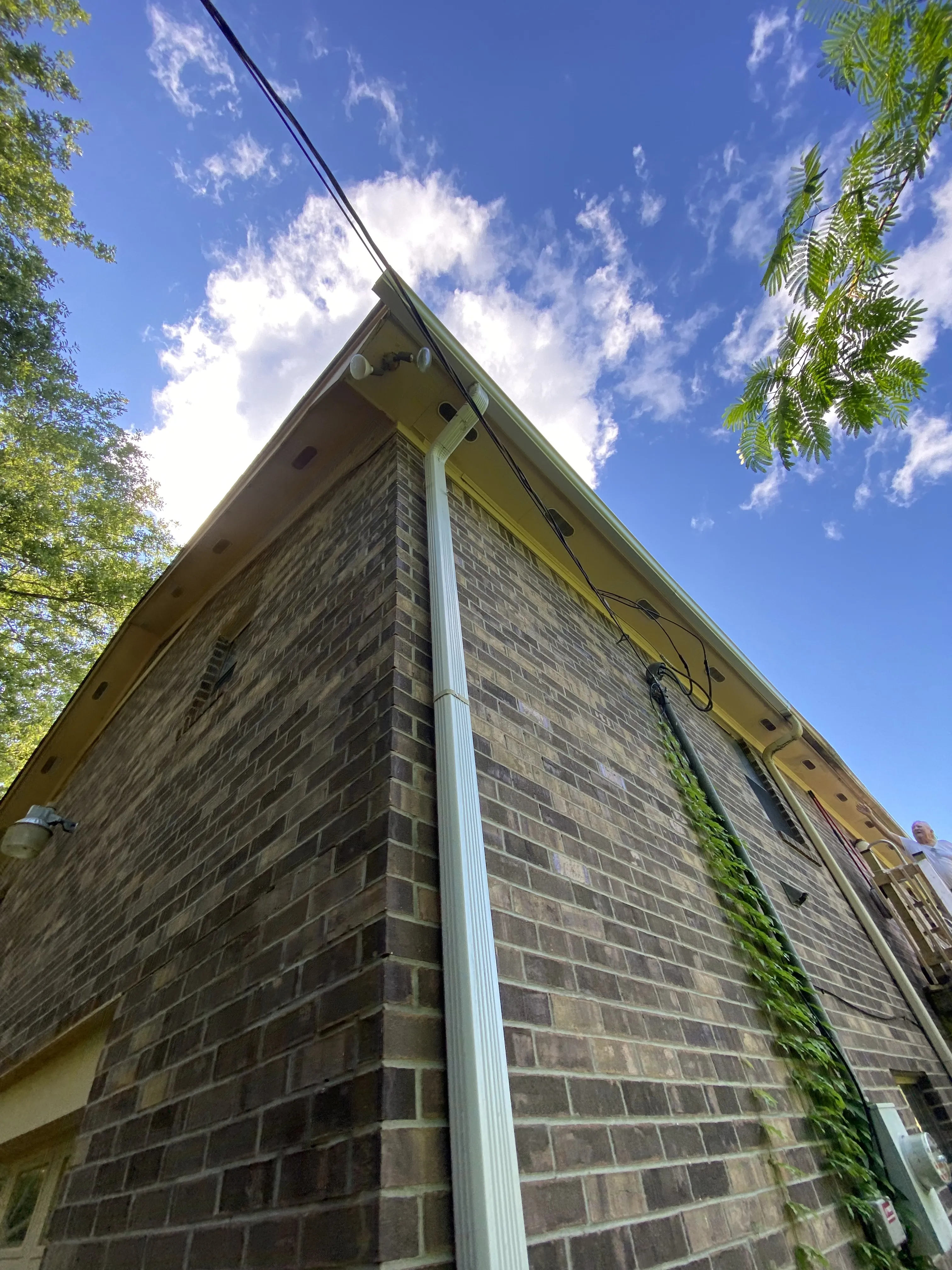
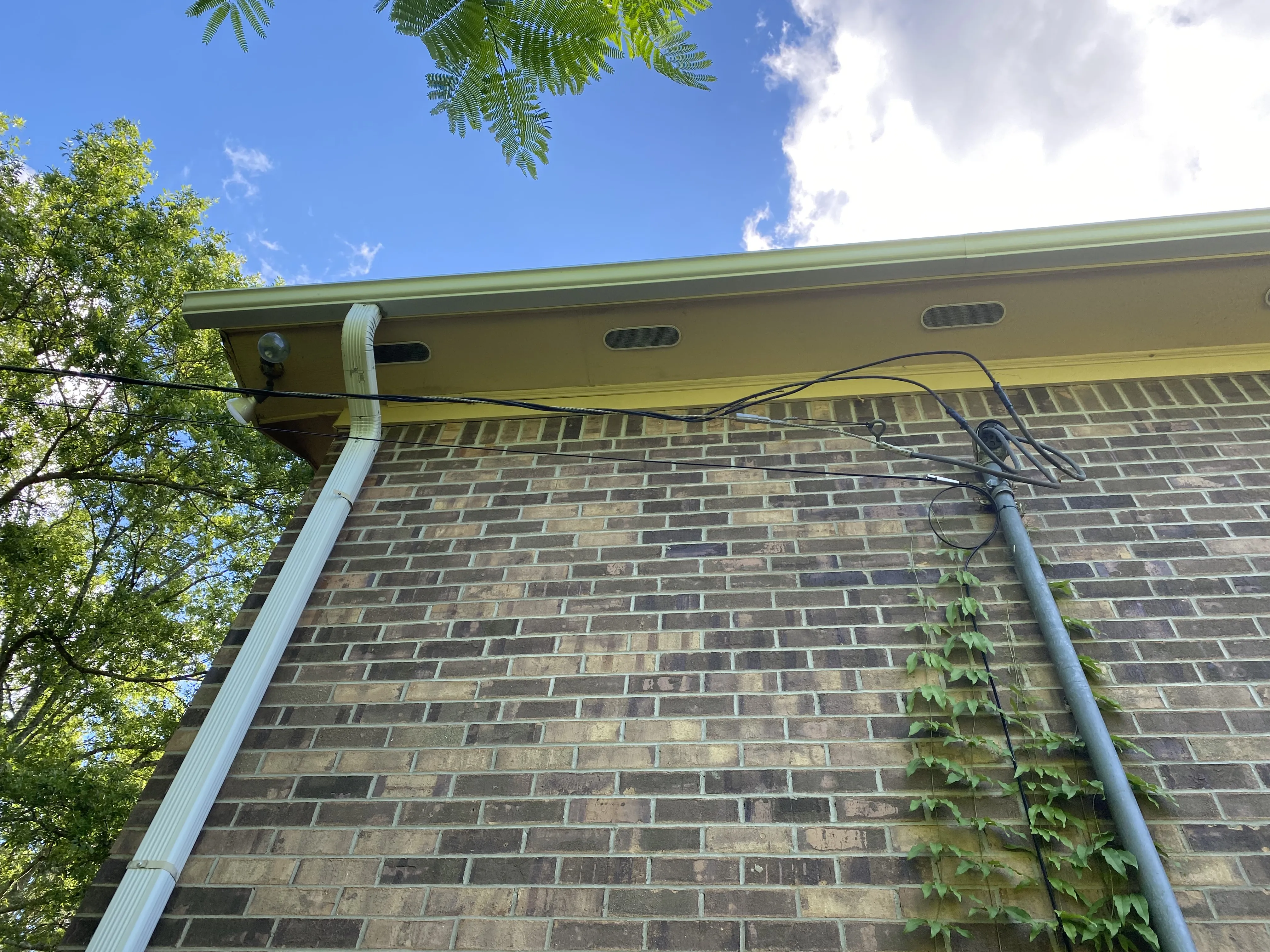
A downspout can pull away at an elbow, outlet, or lower section after impact, wear, or repeated movement in bad weather. Even a small opening can send water straight against siding, trim, or the ground beside the foundation instead of through the intended route.
02Clogs at the gutter outlet
When water cannot enter the downspout freely, the gutter may overflow at one end or spill over the front edge. Leaves and debris are one possibility, but a loose connection or damaged section can create a similar problem. A rain-time photo or a clear description of where water escapes is helpful.
03Outlet water landing too close
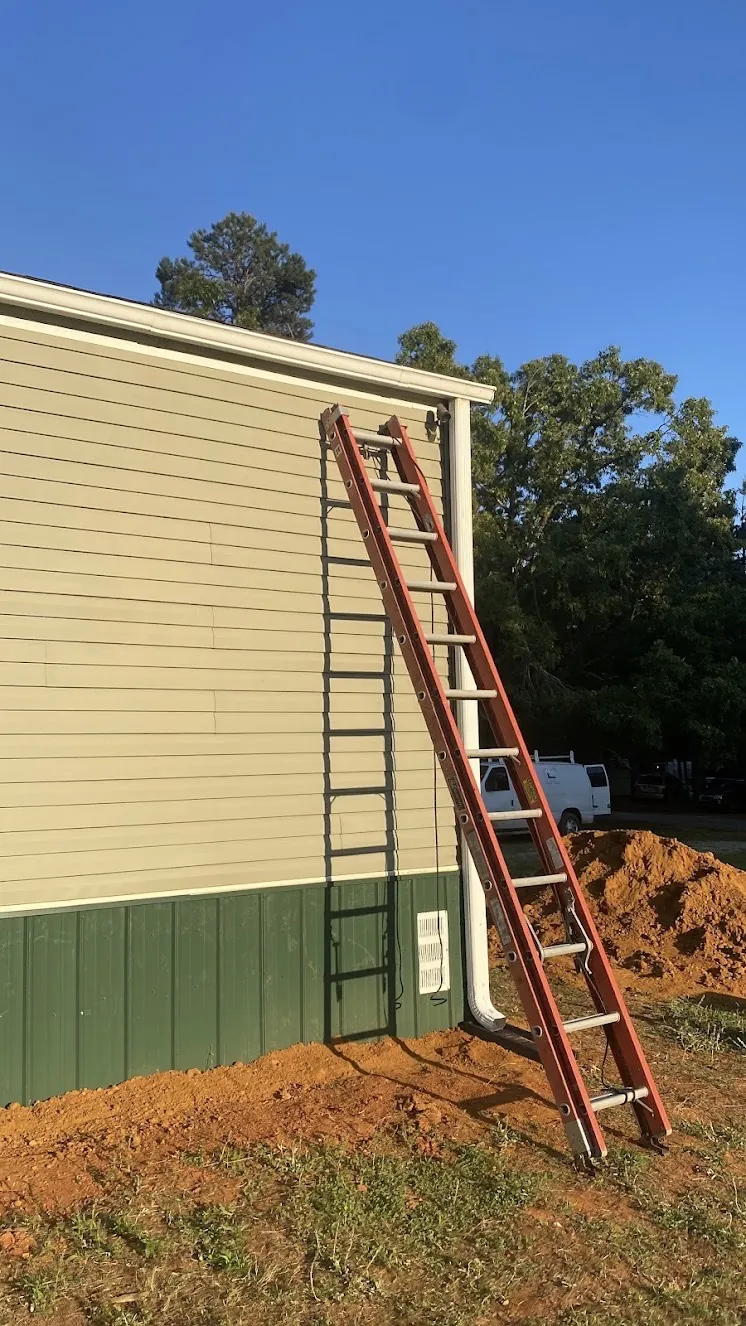
Water needs a route away from the house after it leaves the downspout. If it repeatedly hits the same patch of soil, planting bed, walk, or foundation edge, the surrounding area can show the effects first. Include the landing area in the quote request, not just the gutter above it.
04Crushed or damaged lower sections
The lower part of a downspout is exposed to lawn equipment, foot traffic, and everyday impacts. A dented, cracked, or disconnected section can slow the flow or send water sideways. The repair conversation starts with whether the damage is limited to one visible section or connects to a larger drainage concern.
05Water wear around the roof edge
Dark streaks, peeling paint, soft trim, worn fascia, or loose soffit near the gutter can show that water has been escaping higher up. Those materials may need attention too, but they also help explain why the downspout repair matters. B&B can discuss the connected exterior details instead of treating each mark as unrelated.
06A wider gutter decision
A focused downspout repair can be the right solution when the rest of the system is in sound condition. When several runs sag, leak, or overflow, it may make sense to discuss a broader gutter repair in Tupelo or a new gutter installation plan.