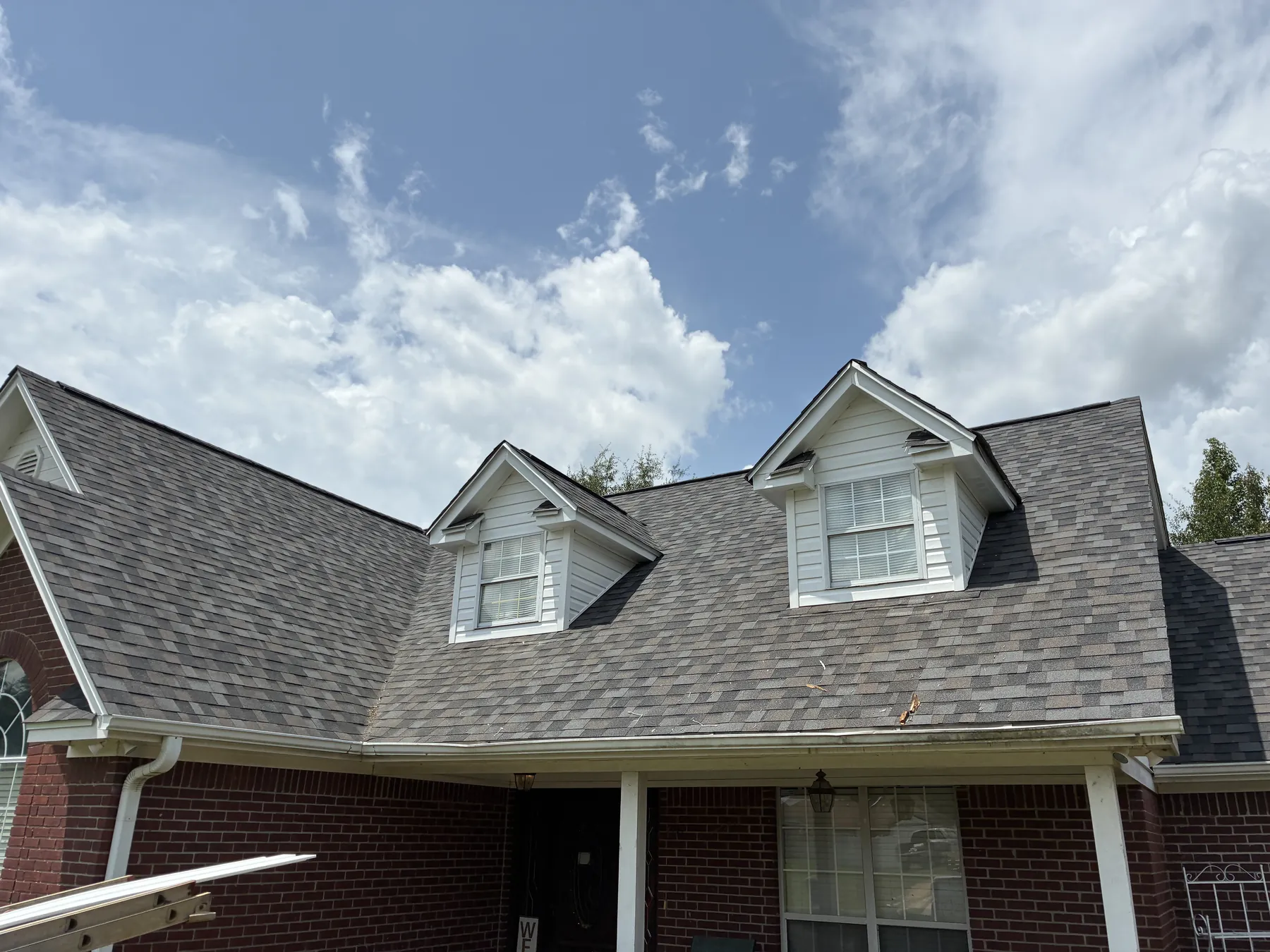
01Roof repair concerns
Missing, lifted, cracked, or visibly worn shingles are worth discussing before rain and wind keep working on the same area. The location matters. A concern near a valley, vent, chimney, ridge, or roof edge may need a different conversation than an isolated shingle in the middle of a slope.
02Leaks and water marks
A ceiling stain, soft drywall, peeling paint, or fresh drip does not automatically identify the source. It may relate to the roof, flashing, gutter overflow, a window, or another path water is taking. Note when you saw it and whether it changes after rain so the visible damage is not treated as the whole story.
03Vinyl siding repair
Vinyl siding can crack, come loose, warp, or show gaps around corners and trim. Impact, wind, heat, age, and nearby water problems can all affect what you see. A focused repair starts by looking at the panel, the material around it, and whether moisture or damage has reached the surface behind it.
04Metal siding and exterior panels
Metal siding and exterior panels need attention when a section has come loose, been dented, shows wear around fasteners, or no longer meets the surrounding trim cleanly. Include wide photos that show how the area sits on the house, along with closer photos of the connection or damaged spot.
05Gutters, fascia, and soffit
The roof edge is where several important details meet. A gutter that pulls away, overflow during rain, soft fascia, or a damaged soffit can affect the work around it. B&B can discuss the roofline as a connected area, rather than repairing one visible piece while ignoring the material beside it.
06Trim and exterior finishing
Exterior trim helps close out the edges around siding, windows, doors, and roofline details. When trim is loose, worn, split, or showing paint failure, it can make the whole side of a home feel neglected. It is often useful to include these details in the same conversation as siding, gutter, or roof-edge repair.